When a brand opens your pitch, they're not reading it start to finish. They're scanning for a few specific things: who you are, who watches you, what it costs, and whether anyone has trusted you before. A media kit that answers those in under a minute gets a reply. One that doesn't, usually doesn't.
- Brands look for who you are, your audience, your numbers, your rates and past work.
- Use average stats, with a date on them.
- A price on the page saves a round of emails.
In this guide
01The five things brands look for
- Who you are, in one line.
- Who actually watches you: age, location, interests.
- Numbers, not vibes: followers, average views, engagement.
- What it costs: rates or packages.
- Who you've worked with: brands, results, or a strong example.
Most kits skip at least two of these. Rates and audience data are the ones that go missing most often, and they're exactly what a brand needs to say yes.
021. Who you are, in one line
Name, niche, and the kind of content you make. That's it. Your full story can live on your profile.
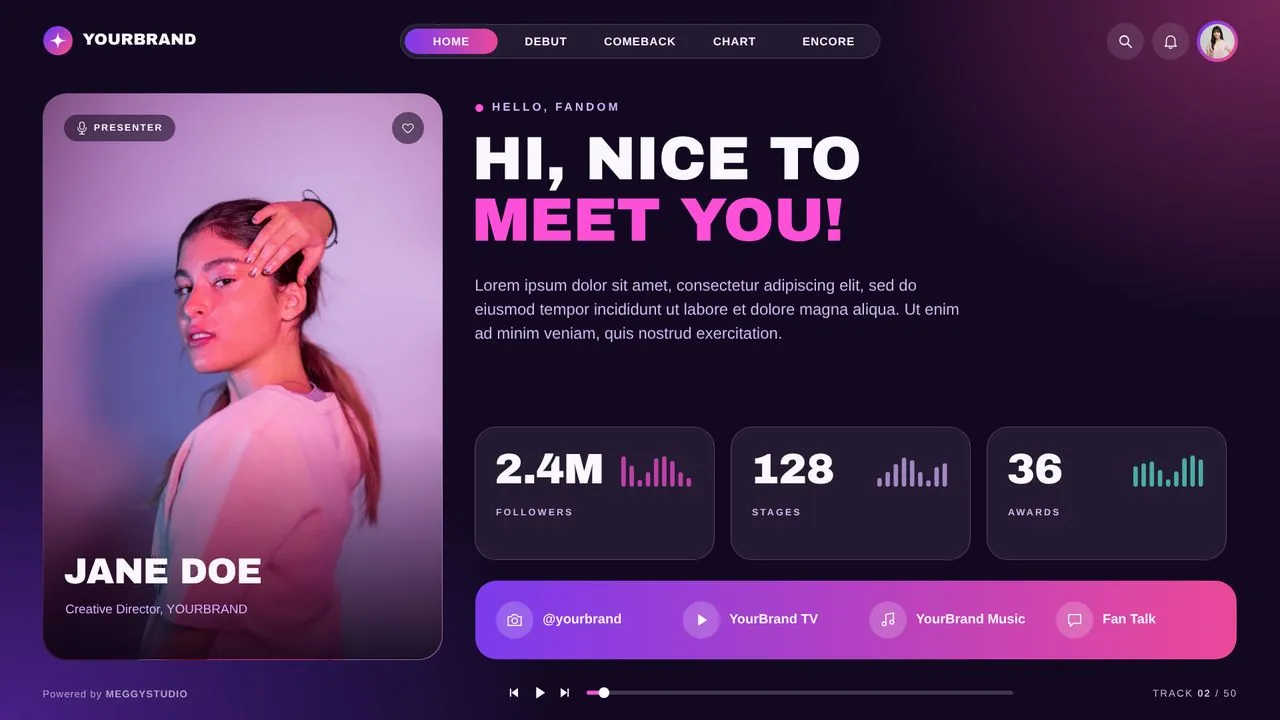
Hi! I'm a passionate content creator who loves sharing my life with my amazing community.
Jane, 24. Skincare and K-beauty reviews for women 18 to 30. 2.4M monthly views.
032. Who actually watches you
Pull this straight from your platform analytics: top countries, age range, gender split. Brands care more about a good match than a big number. 40,000 followers in exactly their market can be worth more than 400,000 everywhere.
043. Numbers, not vibes
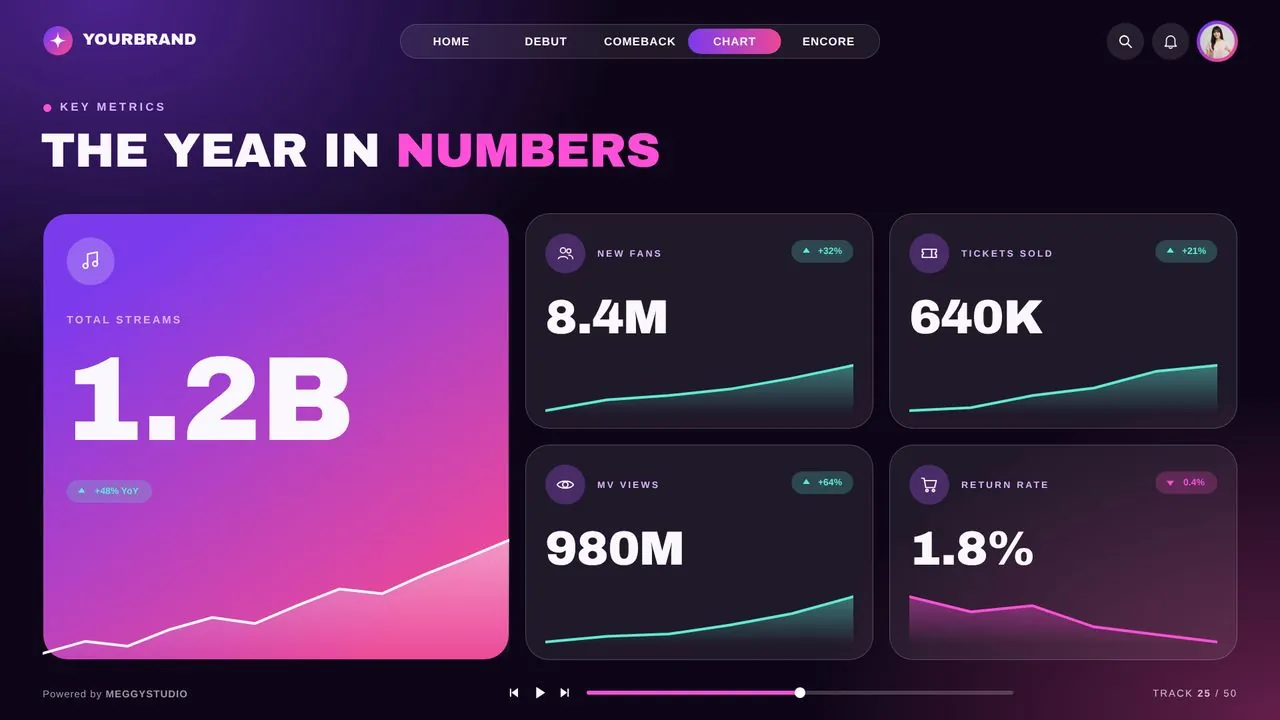
Average views per post, engagement rate, and growth over the last few months. Use averages, not your one viral post. Brands know the difference, and an honest average builds more trust.
054. What it costs
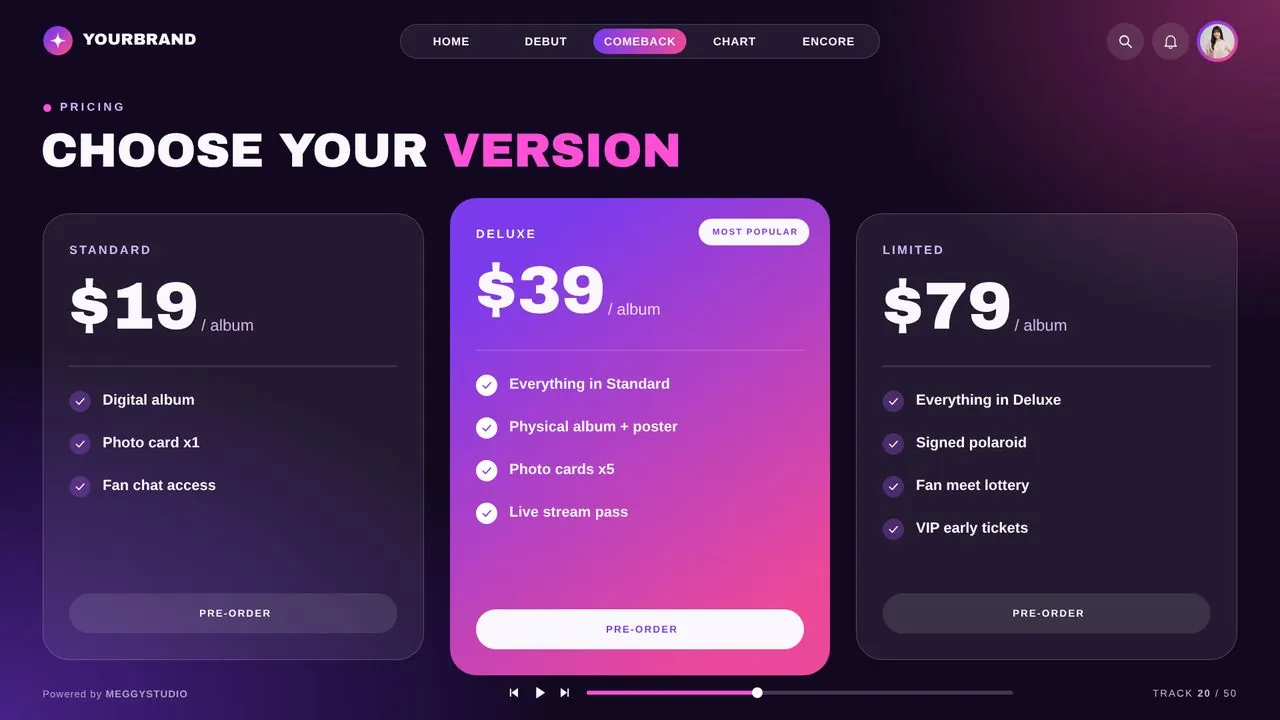
Show two or three packages with what's included. A single post, a post plus stories, a longer campaign. Starting prices are fine if you prefer to quote per brand. A price on the page saves a whole round of emails.
065. Who you've worked with
Logos of past partners, plus one result if you have it: views, clicks, sales, or a quote from the brand. If you're just starting, use your best-performing post or a collaboration with another creator instead.
A pretty PDF with no rates and no audience data is where most brand deals quietly die.
07Sending it
- Export a PDF for email, and keep it under a few MB so it doesn't bounce.
- Update the stats every month or two. Old numbers are the most common problem we see.
- Tailor the first slide to the brand you're pitching. One sentence on why you're a fit goes a long way.
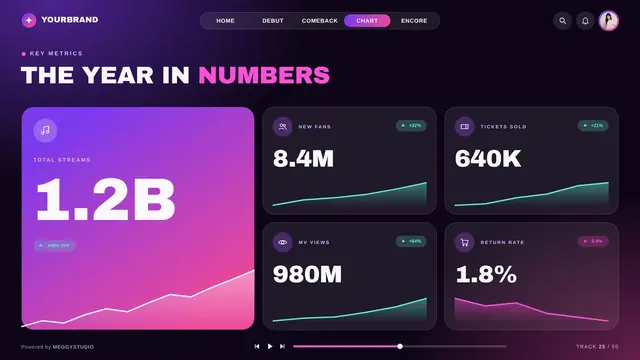
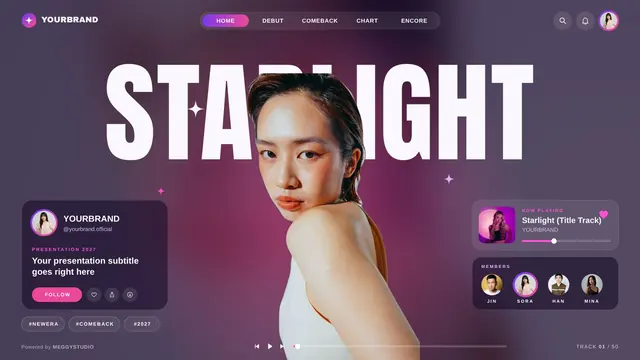
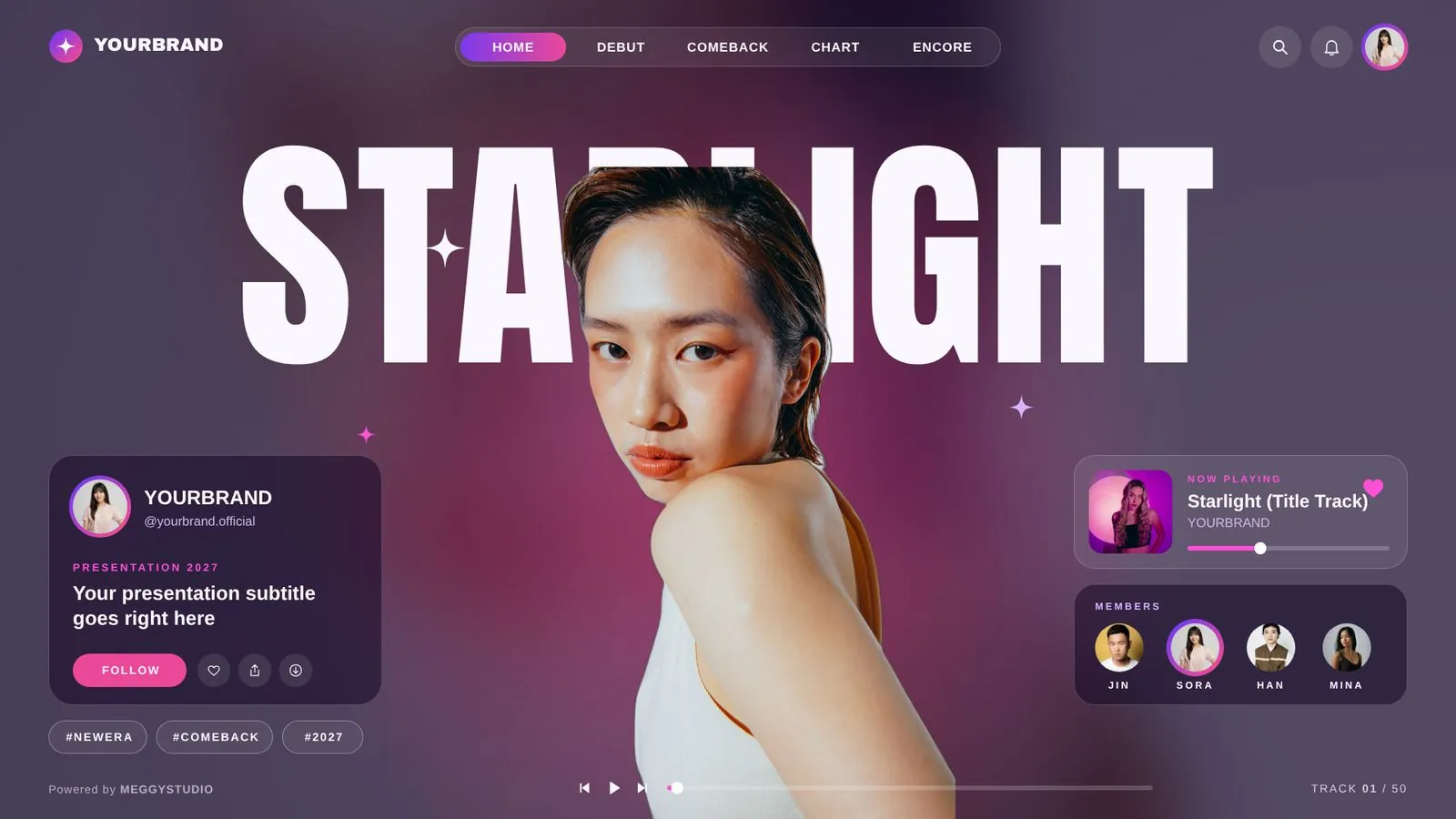
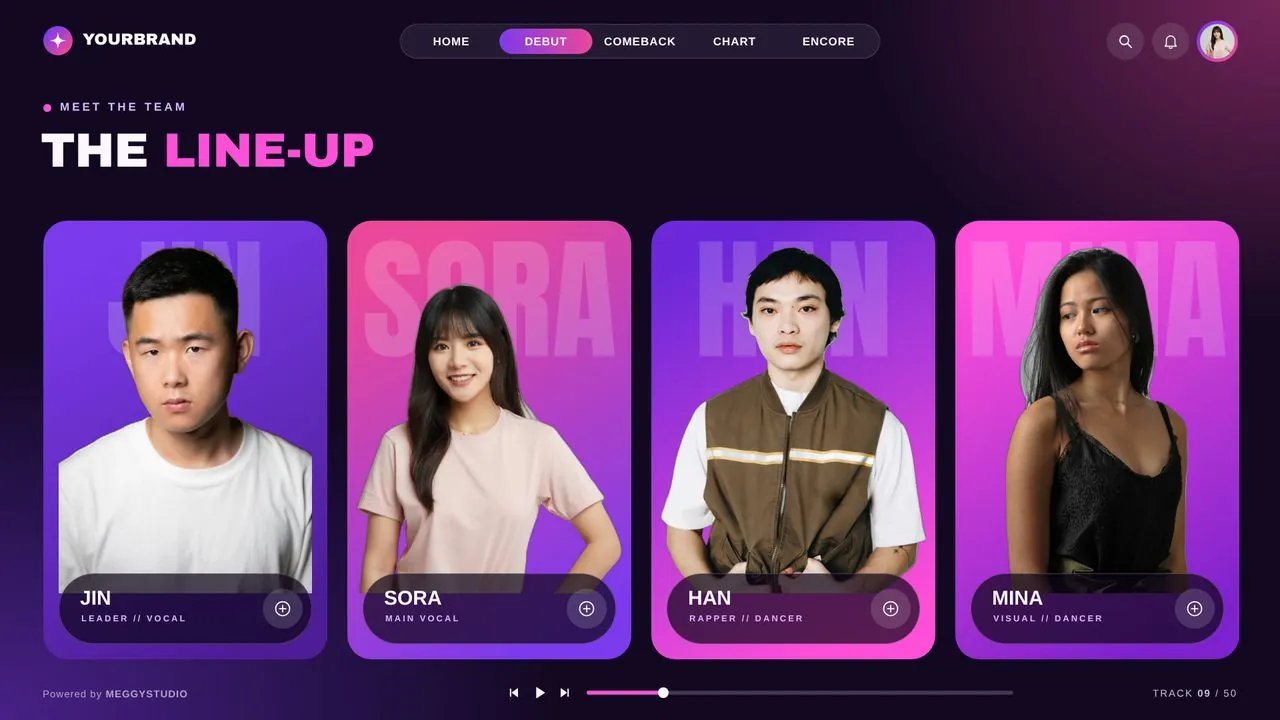
K-Pop Bento has intro, stats, pricing and lineup slides that work as a creator kit.
08FAQ
What should a creator media kit include?
A one-line intro, your audience demographics, your key stats per platform, your rates or packages, and brands you've worked with. Contact details on every version you send.
Should I put my rates in my media kit?
Usually yes, or at least a starting price. A kit without rates often gets a slower reply, because the brand has to ask before they can even budget.
How many pages should a media kit be?
Four to eight slides. Short enough to read in a minute, detailed enough that a brand can make a decision.
What if I haven't worked with brands yet?
Show results from your own content instead: a post that performed well, a product you reviewed, or a collaboration with another creator.
Written by MEGGYSTUDIOWe design 50-slide PowerPoint templates with Morph built in.