
Investors who get a short, honest update every month are the ones who say yes fastest when you raise again. The update isn't admin. It's your next round, written slowly.
- Same five sections and the same metrics, every time.
- Report lowlights early, with a plan.
- Make specific asks so investors can help.
01The format
Same five sections, every time, so investors know where to look.
02Keep the numbers consistent
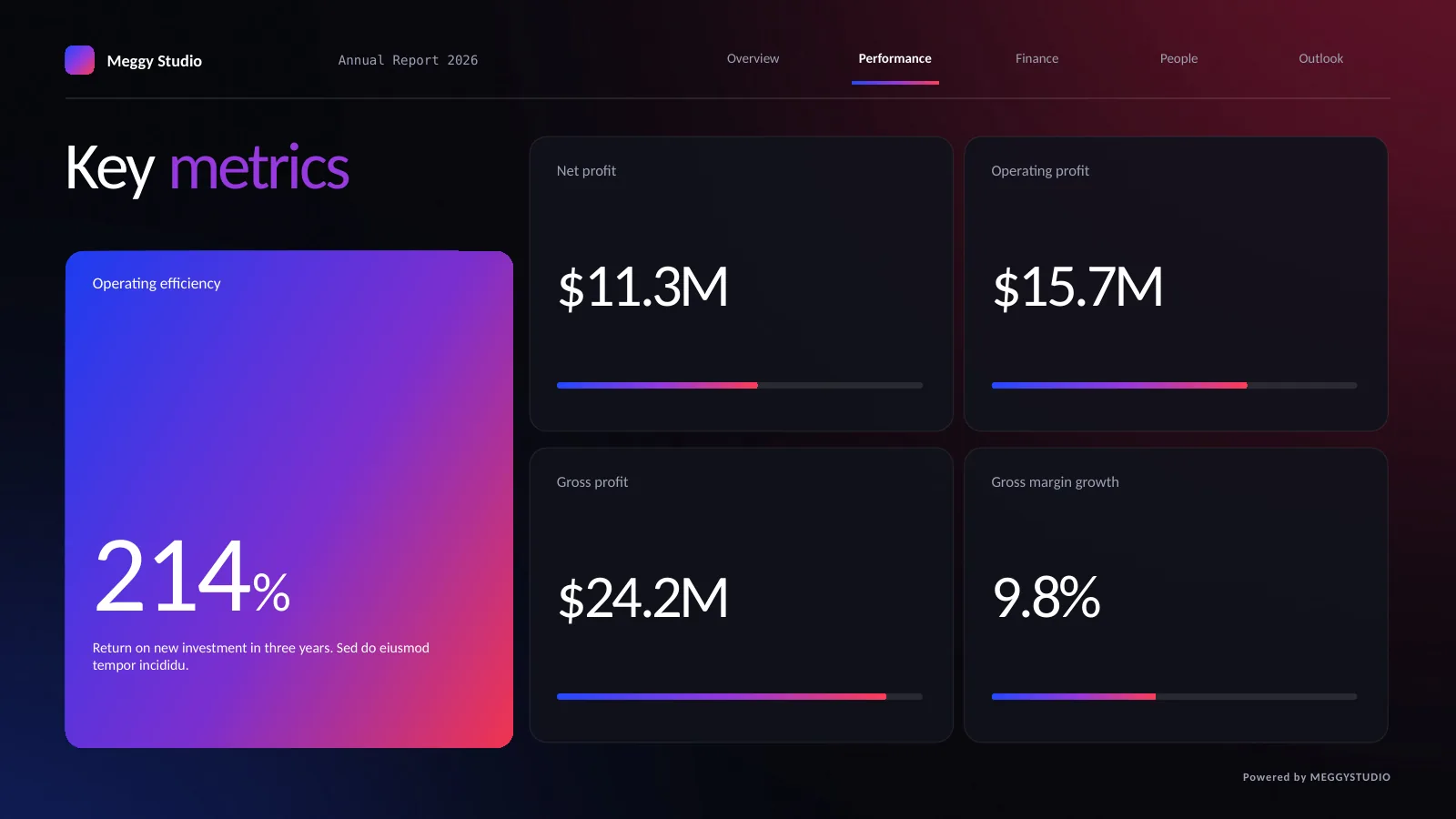
Pick your metrics once (revenue, growth, burn, runway, plus one product metric) and report them every time, even when they look bad. Changing metrics is the fastest way to lose trust.
Revenue looks great this month!
Revenue: up 12% month on month. Runway: 14 months.
03Always ask for something
Your investors want to help. The ask section is how you let them.
Be specific: "Intro to a head of procurement at a hospital group" gets answered. "Any intros welcome" doesn't.
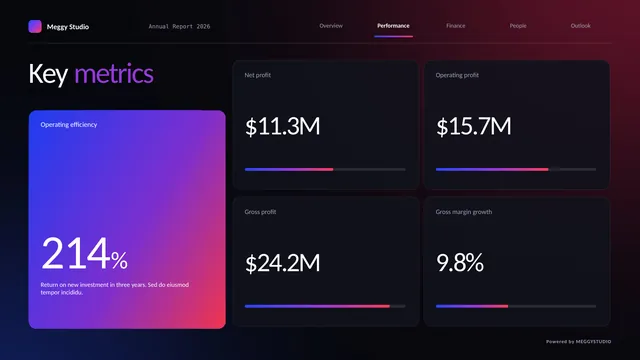
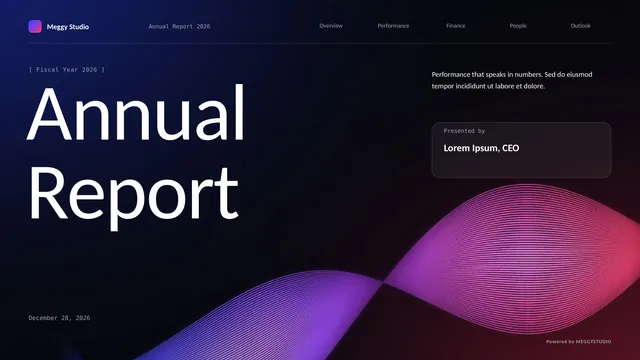
Report templates with KPI, chart and timeline slides.
04FAQ
How often should I send investor updates?
Monthly in the early stage, quarterly later. Consistency matters more than length.
Should I share bad news in an investor update?
Yes. Investors trust founders who report lowlights early, with a plan.
Should the update be a deck or an email?
Monthly updates are usually an email. Quarterly updates and board meetings often use a short deck.
Written by MEGGYSTUDIOWe design 50-slide PowerPoint templates with Morph built in.