Ramadan changes daily routines: when people eat, shop, scroll and gather. A good Ramadan campaign deck starts with that rhythm, then shows how the brand fits into it respectfully.
- Plan around the rhythm of the month.
- Show products as menus and boxes.
- Lead with togetherness, not only discounts.
In this guide
01Plan around the rhythm of the month
| Phase | Moment | Campaign focus |
|---|---|---|
| Before | Preparation | Awareness, pre-orders |
| Early and middle | Sahur and iftar | Daily rituals, food, gathering |
| Last ten days | Reflection and giving | Charity tie-ins, care packages |
| Eid | Celebration and gifting | Hampers, gifts, family |
02Products and bundles
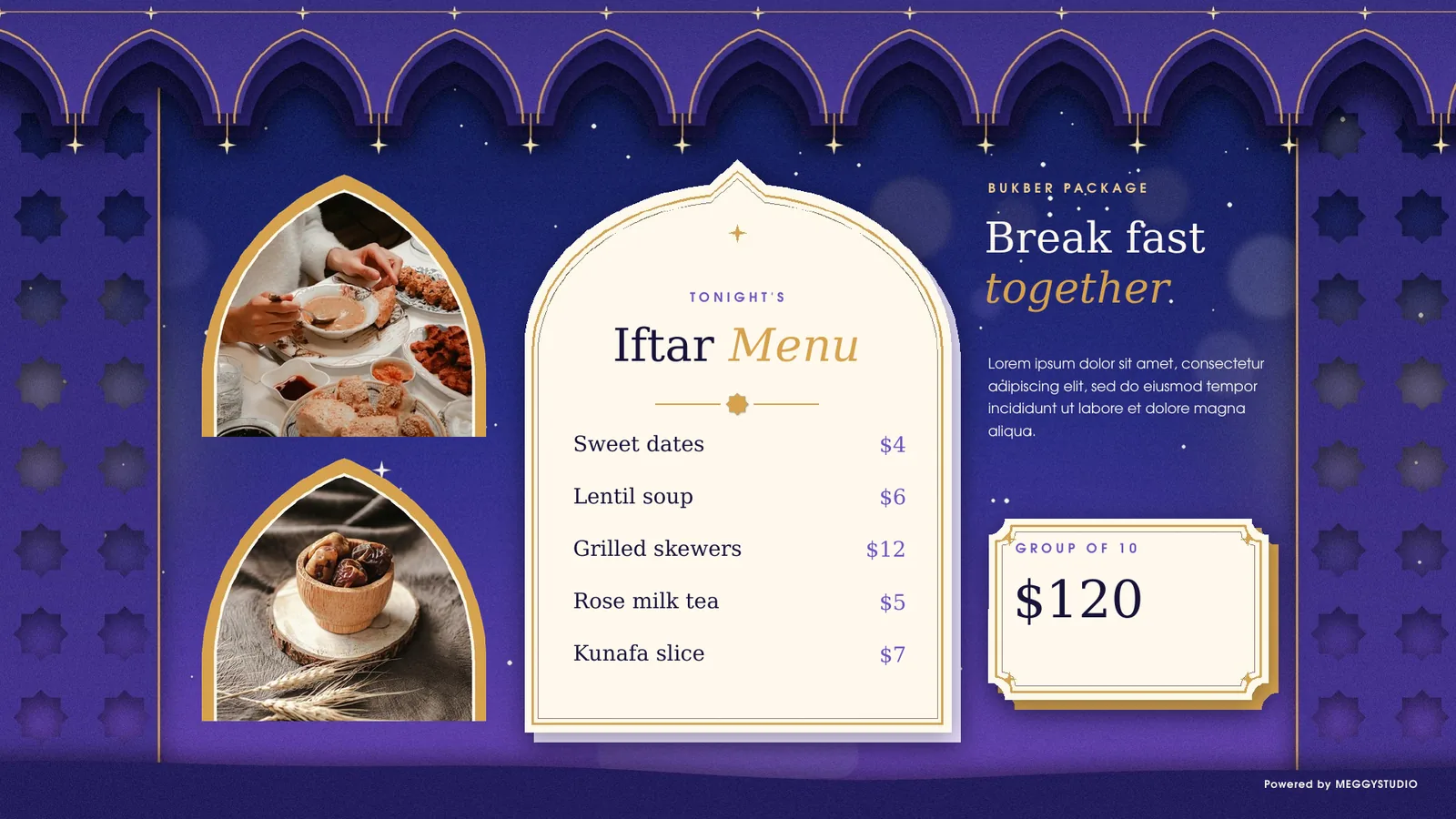
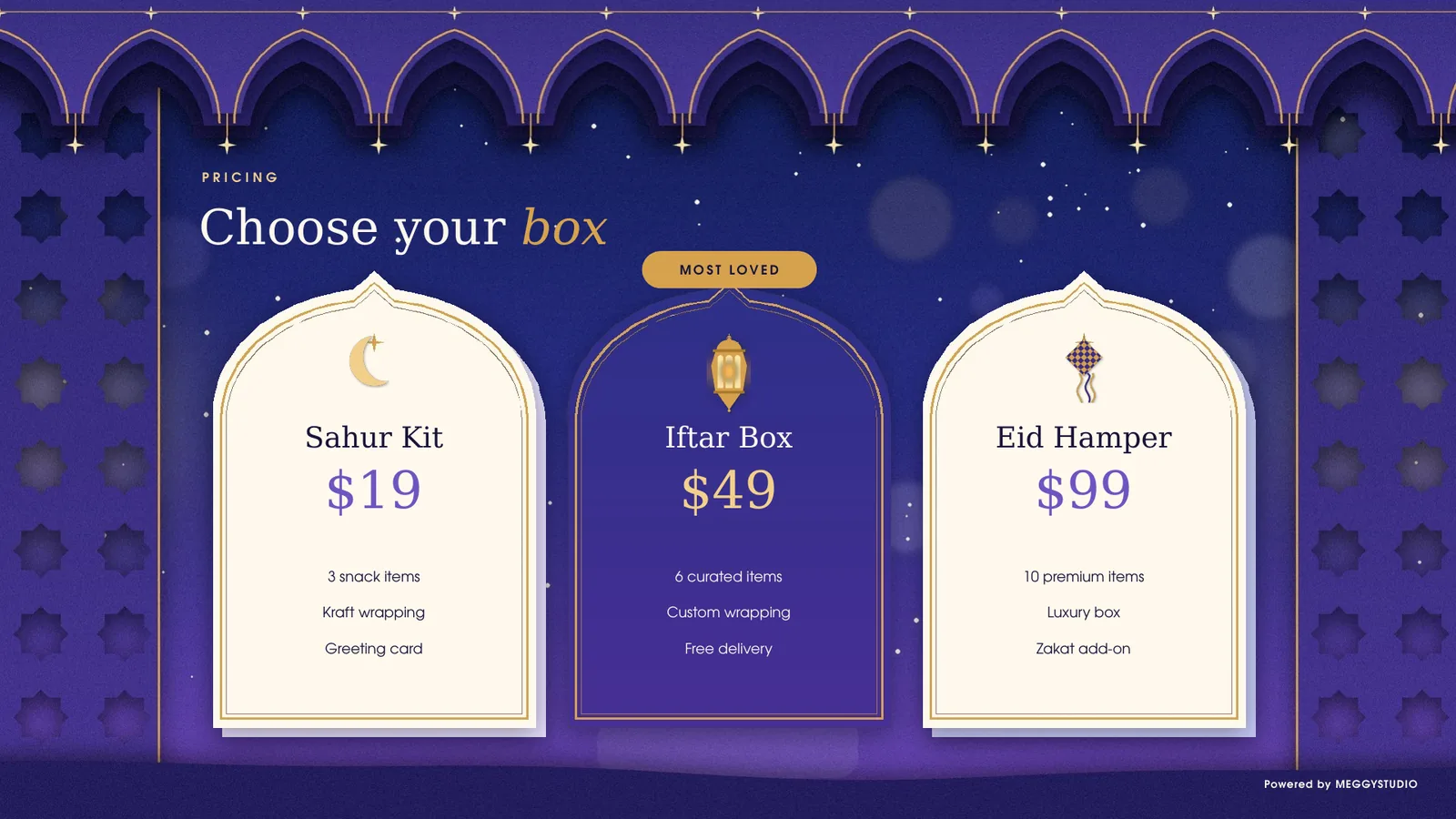
Ramadan boxes, iftar menus and Eid hampers work best shown as a menu or a set of options with prices.
03Visual direction
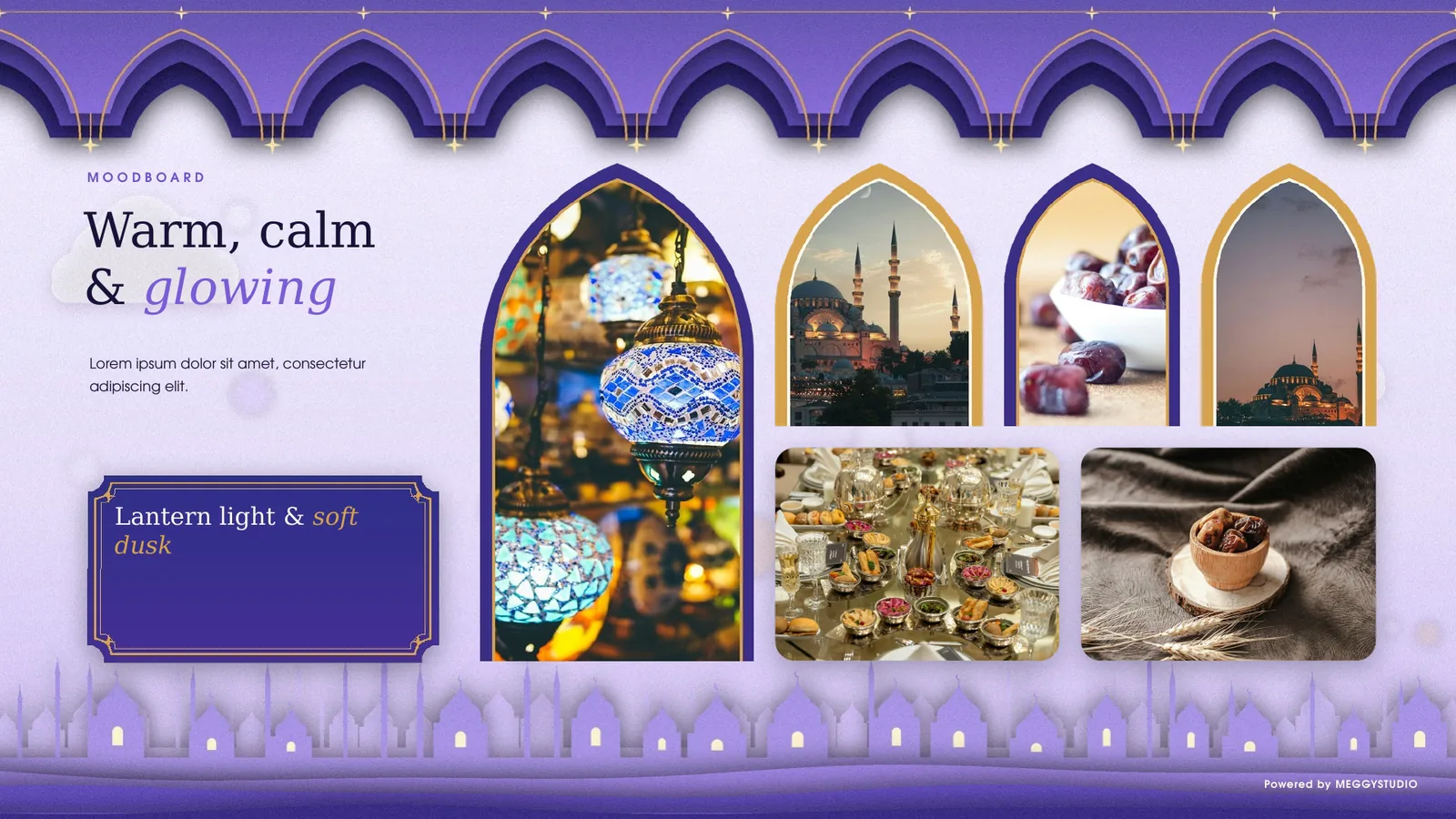
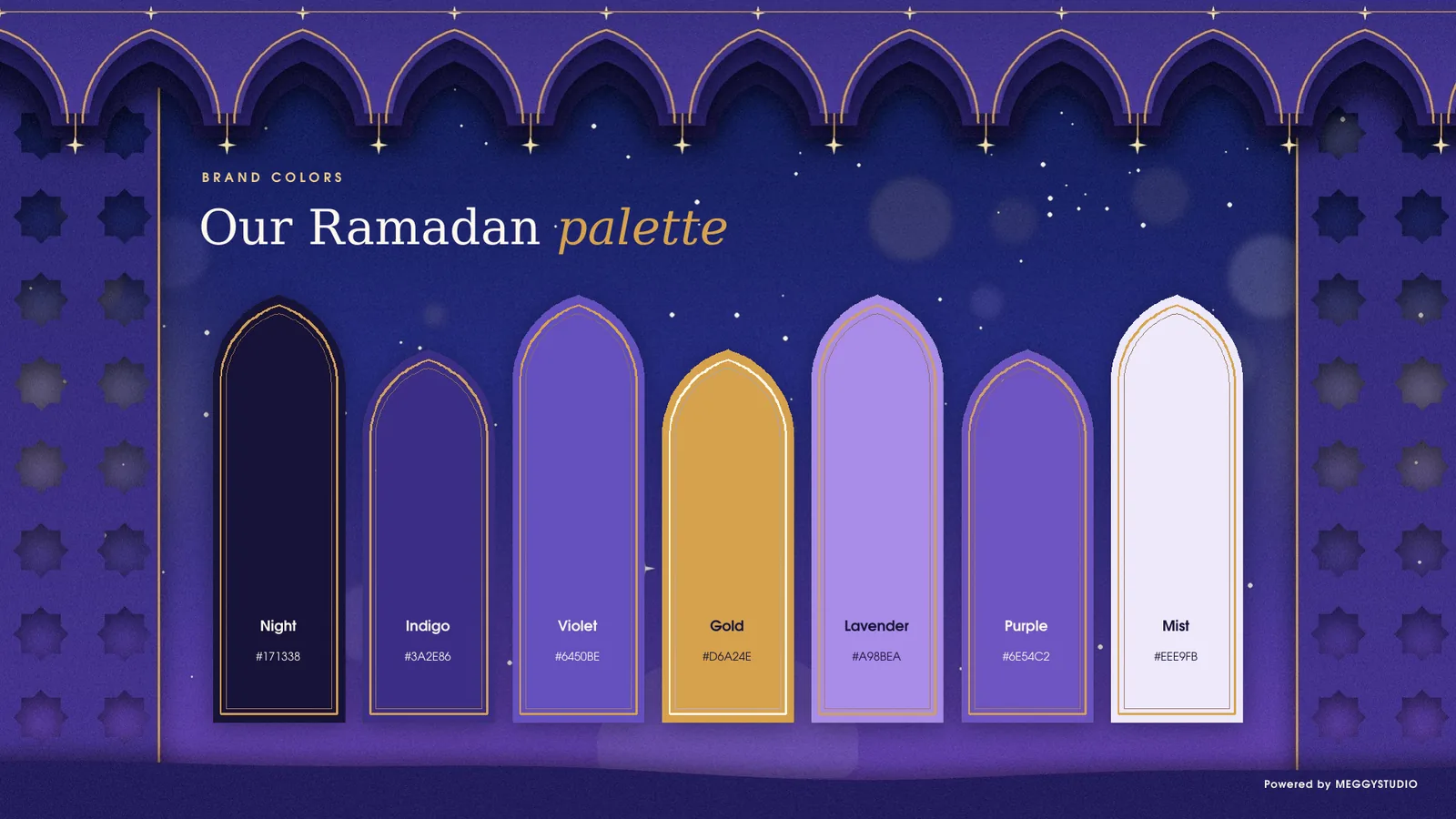
Clients want to see the mood before they approve. A moodboard and a colour palette slide do that in two slides.
04Keep it respectful
Avoid making the month only about discounts. Campaigns that focus on togetherness, care and generosity tend to land better than ones that only push sales.
Ramadan mega sale, up to 70% off!
Iftar for two, delivered before maghrib. 10% goes to the local food bank.
Plan for the rhythm of the month, not just the start date.
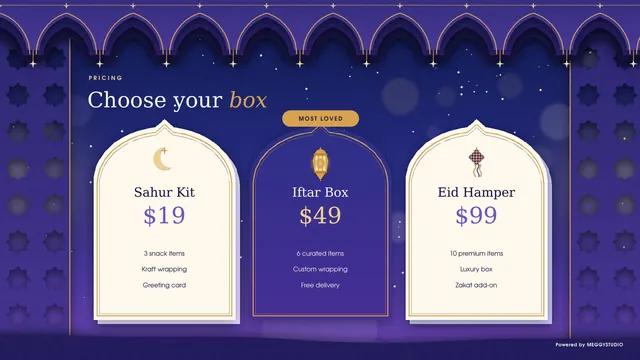
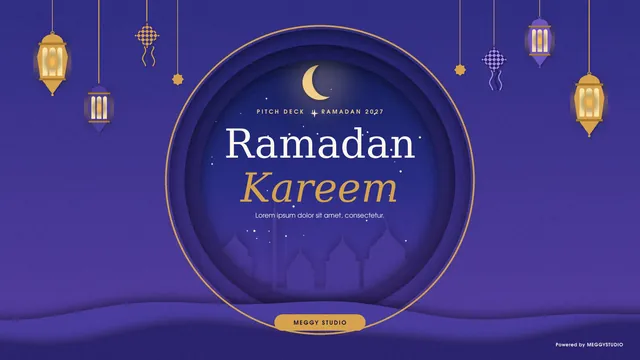
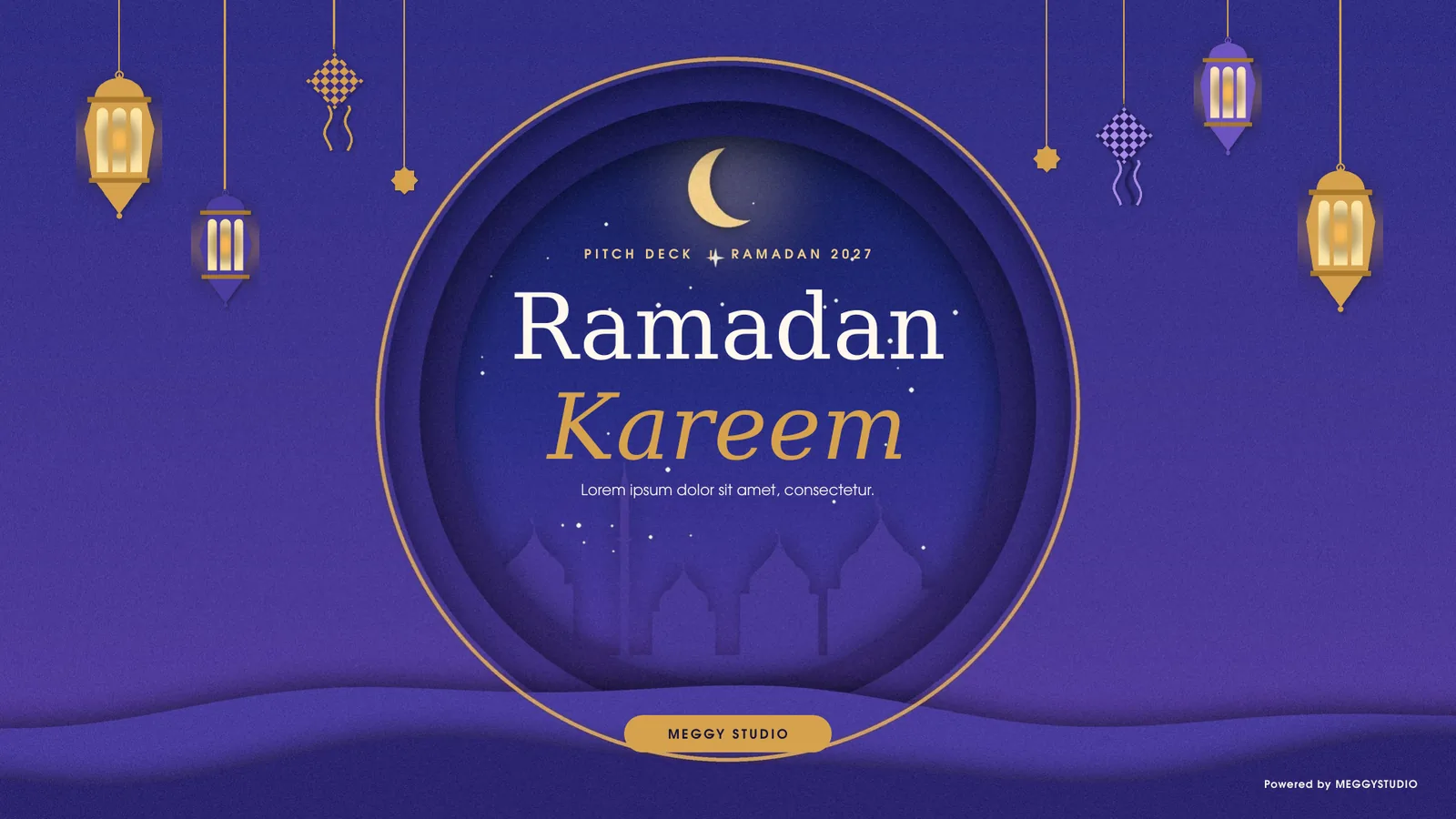
Ramadan Layered has campaign, menu, box, moodboard and palette slides.
05FAQ
When should I start planning a Ramadan campaign?
Most brands plan two to three months ahead, so campaign decks are usually presented well before Ramadan begins.
What should a Ramadan campaign presentation include?
The insight about your audience during Ramadan, campaign idea, timing across the month, products or bundles, visual direction, channels, budget and measurement.
How should a Ramadan campaign be timed?
Many campaigns shift through the month: anticipation before, iftar and sahur moments during, and Eid gifting toward the end.
Written by MEGGYSTUDIOWe design 50-slide PowerPoint templates with Morph built in.