Most sales decks open with "About us" and a timeline of the company. The buyer doesn't care yet. They care about one thing: what changes for them if they say yes.
- Talk about the buyer's world, not your company.
- Add an objections slide before they ask.
- End with a next step, not a thank-you.
01The 10 slides
- Their world is changing. A shift in their industry, not your product.
- What it costs them. The pain, in their words.
- The better future. What life looks like when it's solved.
- How you get them there. Three capabilities, not thirty features.
- Proof. A customer like them, with a number.
- How it works. Four steps from signing to results.
- Pricing. Simple tiers.
- Objections, answered. The slide most reps forget.
- Next step. One clear action with a date.
- Appendix. Security, integrations, detailed cases.
02Talk about them, not you
We are a leading provider of workflow software
Your team spends 6 hours a week copying data between tools
Feature list: 24 integrations, API, SSO
Connects to the tools you already use, set up in one afternoon
03The objections slide
Every buyer has the same three worries: price, switching pain, and "what if it doesn't work". Put them on a slide and answer them before they're asked. It shows confidence, and it saves the meeting from ending on a doubt.
End every sales deck with a next step, not a thank-you slide.
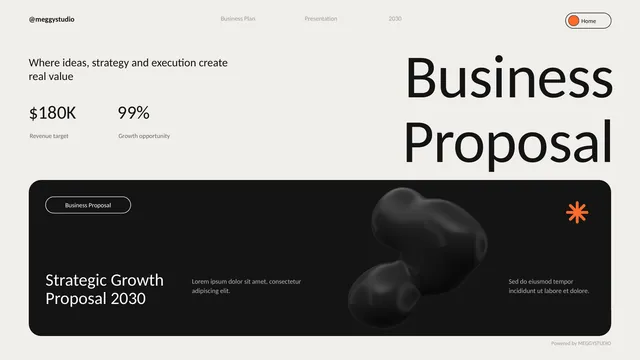
Clean business templates with problem, proof, pricing and next-step layouts.
04FAQ
How long should a sales deck be?
Eight to twelve slides for a first meeting. Keep case studies and technical detail in an appendix.
Should I put pricing in the sales deck?
Show pricing once the buyer understands the value, usually near the end. Simple tiers work better than a long price list.
What is the difference between a sales deck and a pitch deck?
A pitch deck asks investors for money. A sales deck asks a customer to buy, so it focuses on their problem and outcome.
Written by MEGGYSTUDIOWe design 50-slide PowerPoint templates with Morph built in.