Smart home products are easy to over-explain. Sensors, protocols, hubs, cloud. The audience doesn't care yet. They care about the moment: lights already on when you get home, the heating off when you leave. Start there.
- Lead with a moment in someone's day.
- One hub diagram, five or six connections.
- Simplicity is the feature to sell.
In this guide
01Lead with a moment
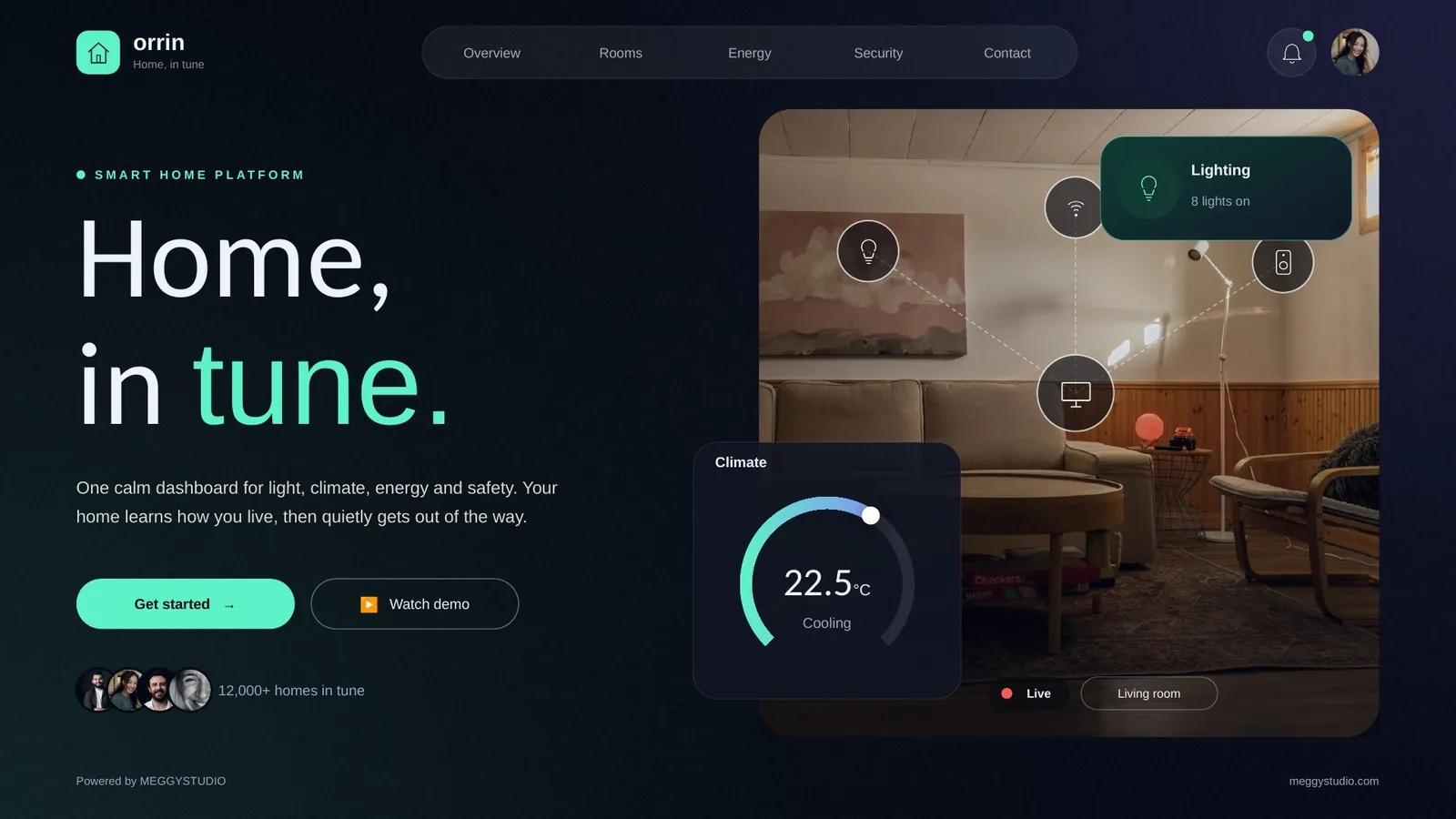
A photo of a real room at a real time of day, with one line about what the product just did. That's your product, explained without a diagram.
An AI-powered IoT ecosystem for intelligent living.
7:00 am. Blinds up, coffee on, heating already at 21 degrees.
02Then show how it connects
One hub diagram: the product in the middle, devices around it. Keep it to five or six connections.
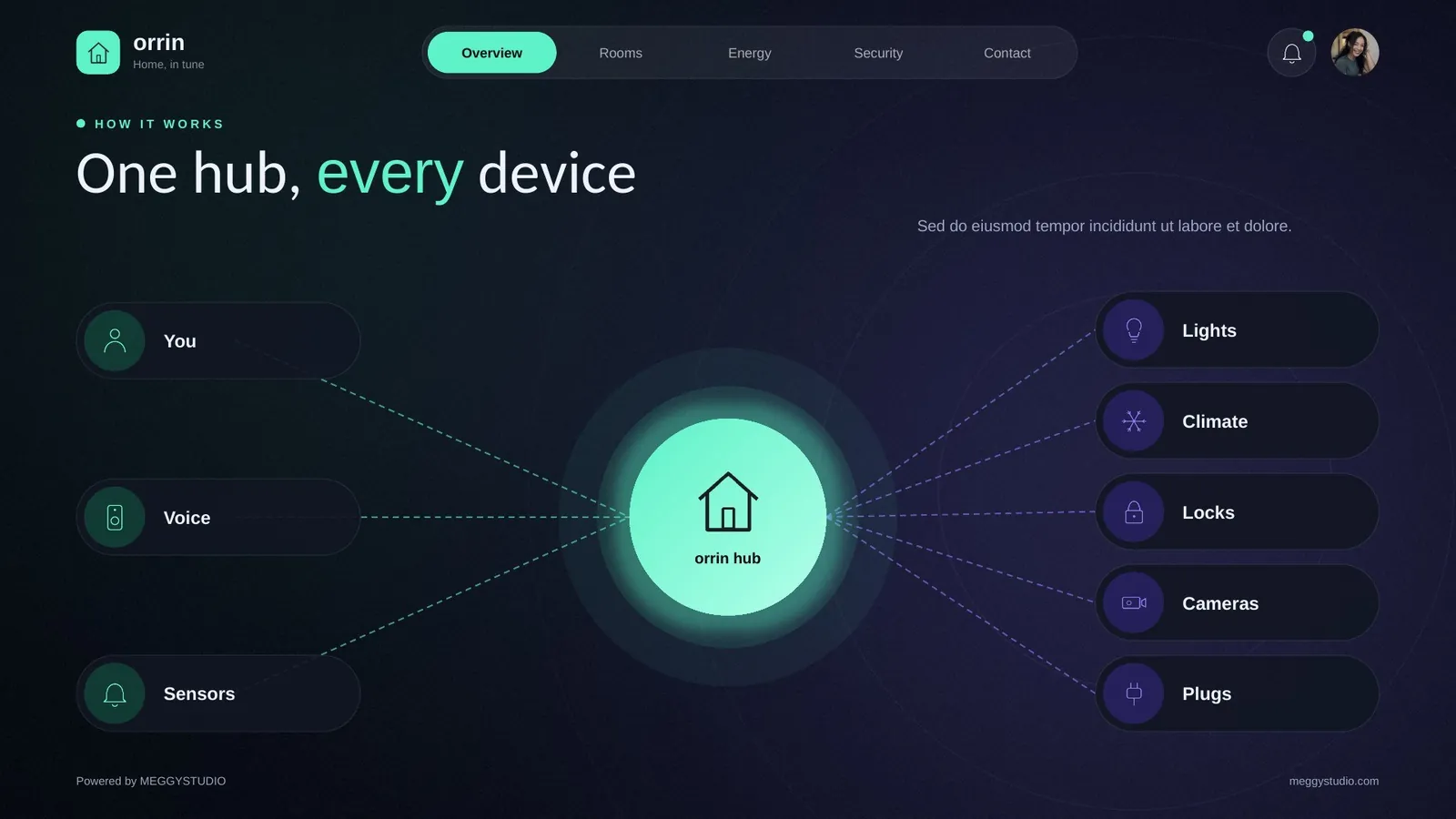
03Data that proves it works
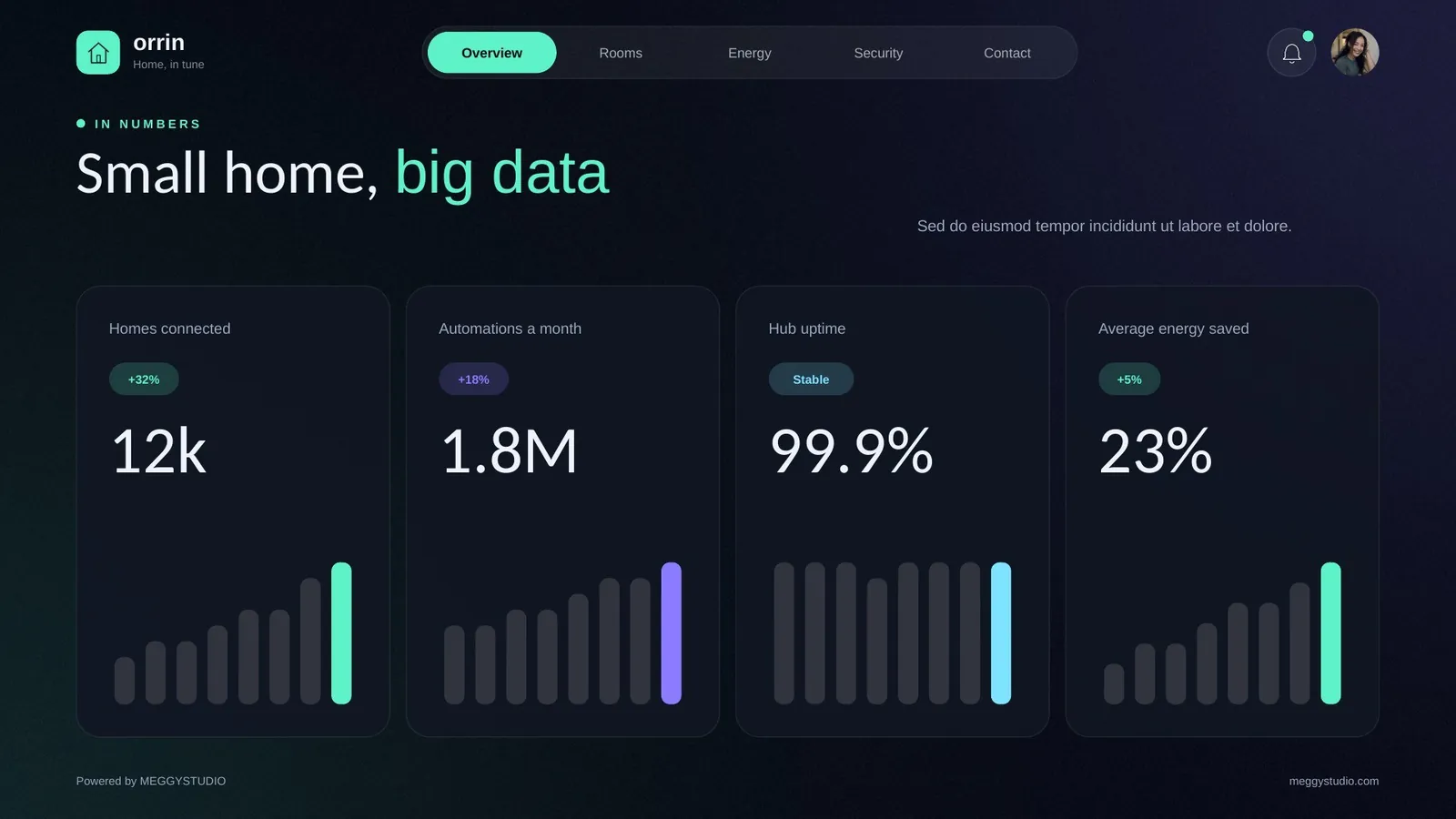
Homes connected, devices managed, uptime, energy saved. For a hardware pitch, uptime and energy savings are especially convincing.
04Who it's for
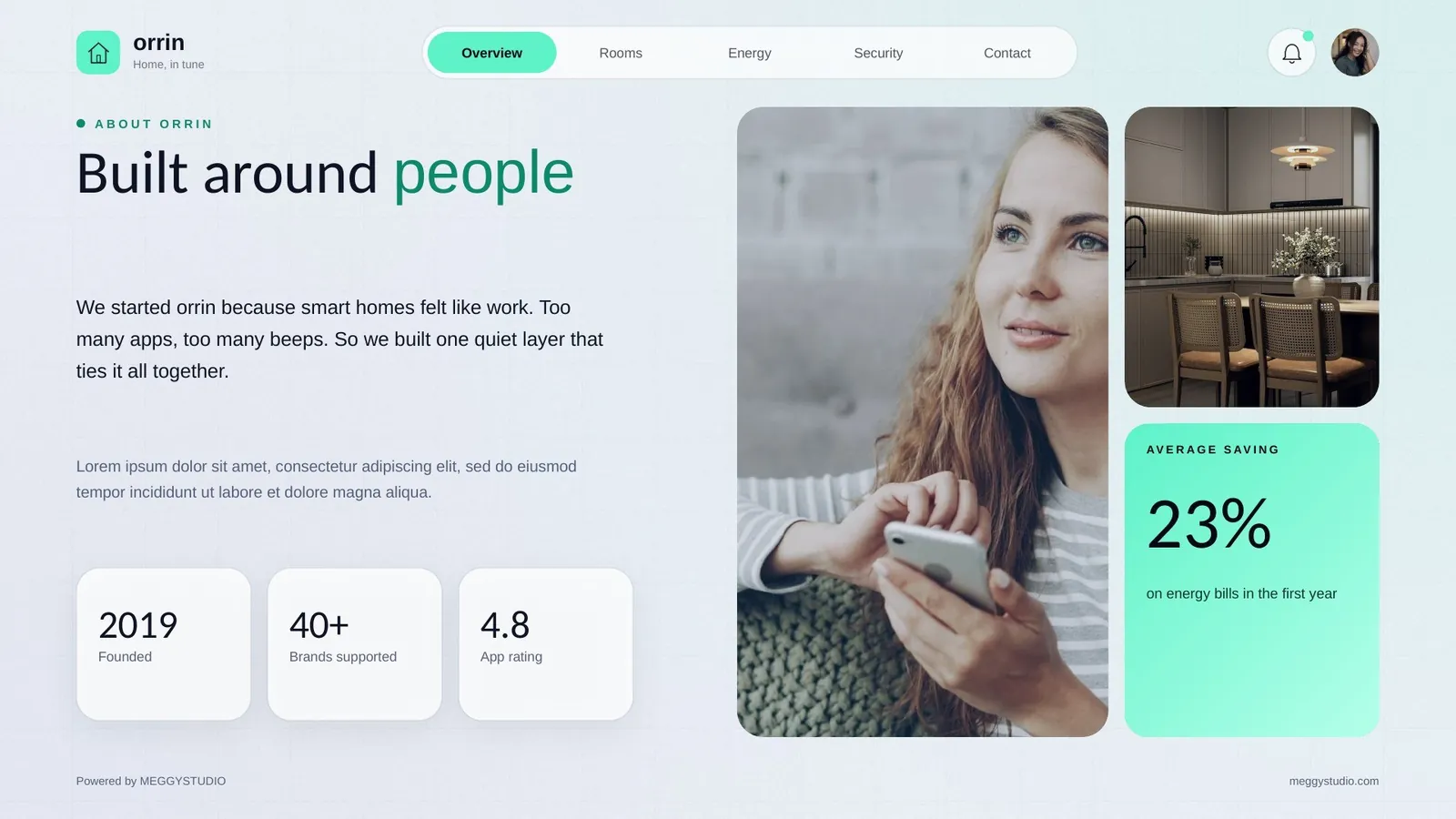
One customer, described specifically. Busy parents, older relatives living alone, renters who can't drill holes. Each one changes how you sell.
05Simplicity is the feature
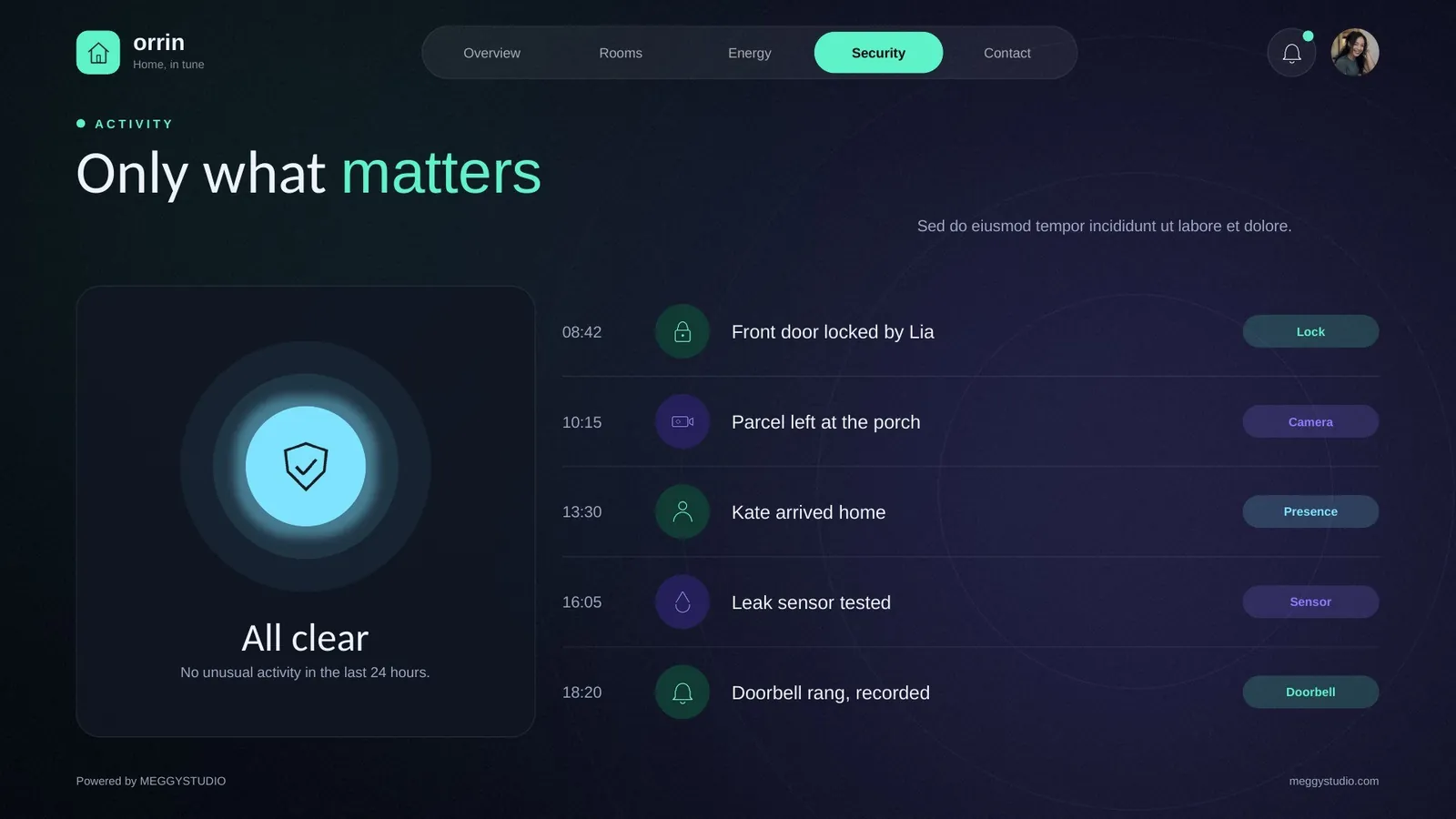
Most people fear smart home setup. A slide showing that the app only shows what matters, and that setup takes minutes, answers the objection before it's raised.
Sell the morning, not the protocol.
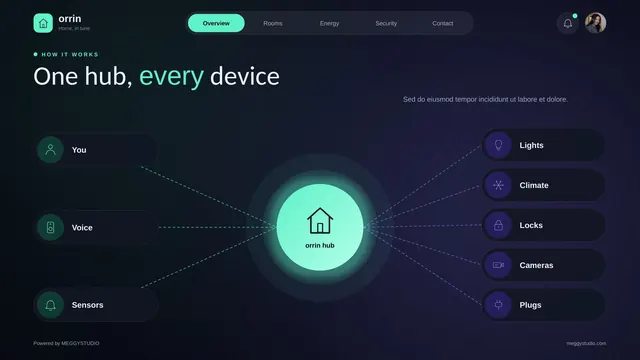
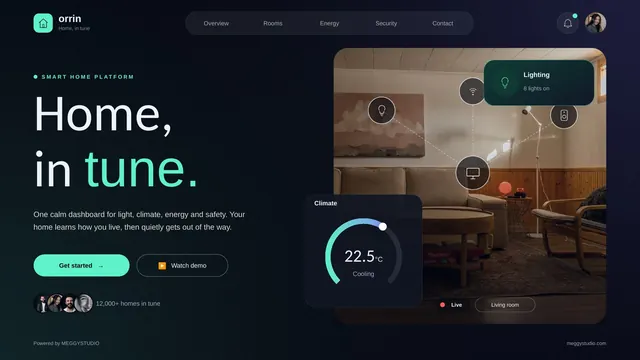
Smart Home Dashboard has moment, hub, data and app slides in a calm dark style.
06FAQ
How do I explain an IoT product in a presentation?
Start with a real moment in someone's day, show what the product does in that moment, then explain how the devices connect.
What should a hardware startup pitch deck include?
The problem, product, how it works, traction or pre-orders, manufacturing plan, unit economics, team and funding needs.
How do I present app features?
Show the app on a phone mockup with three key features, not a full feature list.
Written by MEGGYSTUDIOWe design 50-slide PowerPoint templates with Morph built in.